Jiang Shenglan is hunting for caterpillar fungus, and it is not going well.
Sitting in a makeshift plastic tent in a high pass on the edge of the Tibetan plateau, the 46-year-old farmer gestures to her muddy trousers, evidence of the days she has spent crawling across mountain slopes, belly to the ground, peering into the grass. The caterpillar fungus she has been seeking is prized in Chinese medicine as an aphrodisiac and sometimes referred to as “Himalayan Viagra”. It’s nearly worth its weight in gold.
But the fungus is getting harder to find. Jiang has searched the grasses of this lonely stretch of the Tibetan plateau every year for more than a decade. She is known as the best fungus hunter in her village. But recently she has been having trouble.
“There’s less and less of it every year,” says Jiang. “If the weather is warm and there isn’t much snowfall, then it can’t grow.” She used to collect 20 or 30 stalks of fungus a day during harvest season. This year, after an unusually dry winter, she’s lucky to find 10.
The caterpillar fungus only grows at high altitudes in certain parts of the Tibetan plateau, where cool temperatures and snows create the right conditions for it to sprout each spring out of the corpses of caterpillar worms that have burrowed underground and died. Scientists say there are several reasons the caterpillar fungus is disappearing, including overharvesting, but Jiang sees only one. “It hardly snowed at all last winter,” she says, as she tends the coal stove inside her tent. “The disappearing caterpillar fungus has to do with climate change.”
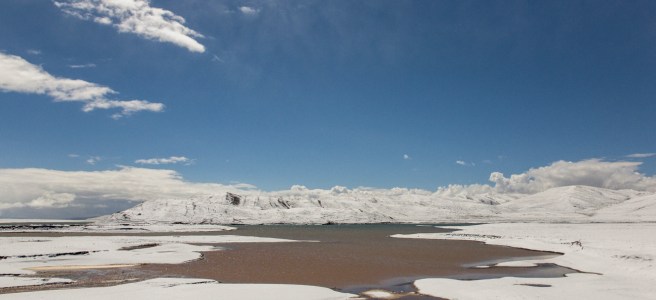
Behind her, the mountaintops rise to more than 4,000m – high enough that some fungus hunters from outside the district die every year from altitude sickness. Yet these are only the low foothills of the Tibetan plateau. And the disappearing caterpillar fungus is only the beginning of its problems.
When the Indian tectonic plate collided with Asia some 40 million years ago, the resulting upthrust produced a giant landmass unlike any other. Spanning an area five times the size of Spain, the Tibetan plateau has an average elevation of 4,500m – nearly as high as the top of Mont Blanc – and the same geological forces are still pushing it higher each year.
So much snow and ice is stored on the plateau that scientists often call it the “Third Pole” – a name that highlights its significance to the earth’s climate. And like the North Pole, the Tibetan plateau has been warming much faster than the rest of the world over the past 50 years. Scientists are racing to understand the changes taking place in the region’s lakes, permafrost, ice and weather patterns. Of the 46,000 glaciers on the Tibetan plateau, many are shrinking.
The plateau’s height gives all these changes huge importance. Because the land mass sticks up so far into the earth’s atmosphere, it governs the Asian weather system, brewing the monsoonal rains each summer and steering westerly wind currents all the way from the Mediterranean. Its lakes, glaciers and wetlands act like a huge water tower for all of Asia. One in five people in the world get their water from river systems that are linked to the Tibetan plateau.
Read the rest of the story on FT.com here.
Photo: Algirdas Bakas

 Leslie Hook